



The promise
Some festivals are events. Shambhala behaves like a return. People talk about the Farm with the shorthand usually reserved for places that changed them, which is why the festival’s language of home, Farmily, and return does not feel like ordinary marketing. The audience helped build that mythology by coming back.
Shambhala has earned that language over time. It began in 1998 as a grassroots gathering of roughly 500 people at Salmo River Ranch, built around local music, art, and the Bundschuh family farm. That origin still counts because the festival did not start as a touring brand looking for a scenic venue. It grew from a specific place, a family-run site, and a West Kootenay electronic scene that kept returning until the Farm became part of the festival’s identity.
More than twenty-five years later, Shambhala’s history gives the 2026 edition a different kind of charge. The festival has survived growth, reputation, pandemic interruption, changing electronic trends, and the practical realities of hosting a major camping event in a rural river valley. Its no-corporate-sponsorship identity and long-running harm-reduction practice are not random brand traits. They are pieces of a system that has had decades to decide what it wants to protect.


The Farm is the centre of Shambhala: six stages, riverside cooling, dust, camp life, late-night commitment, heavy electronic sound, elaborate stage worlds, and a shared identity strong enough to survive outside the gates. Shambhala’s reputation rests on what people believe happens to them there.
The newer research adds a necessary complication: Shambhala’s regional relationship was not always smooth. The festival had to earn legitimacy with the surrounding region while dealing with road safety, policing concerns, traffic, drugs, and the blunt reality that a major electronic gathering changes a rural valley for a week. That history does not weaken the mythology. It makes it more adult.
Where the promise meets the ground
The care infrastructure matters so much. ANKORS, Sanctuary, Safe Space, medical services, consent/outreach teams, Camp Clean Beats, and explicit costume/cultural-respect policies are not side notes. They are part of how the event governs freedom. Without practical care, language about transformation becomes empty very quickly.
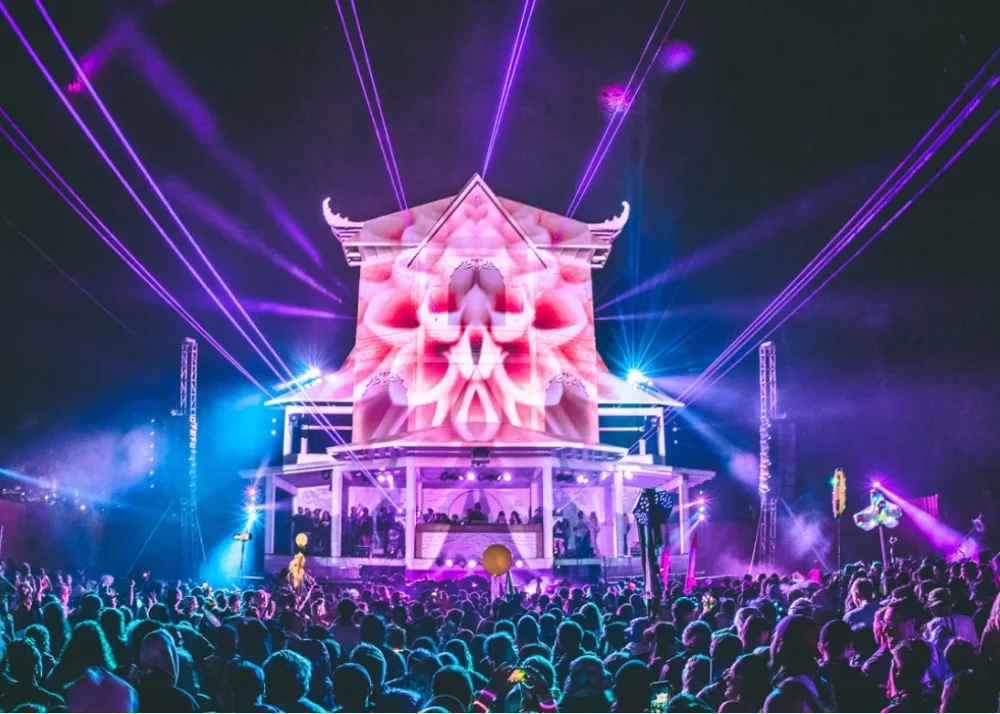
The stage worlds carry the same logic. The Village, AMP, Pagoda, Living Room, Grove and Fractal organise different ways of behaving: bass commitment, open-format exploration, large-format spectacle, riverside recovery, forest immersion, funk-and-groove release. Shambhala works because the Farm lets those identities sit beside each other without needing one single mood to win.
Shambhala matters because it shows the best argument for participatory electronic festivals when they are done with care. A festival can be wild and still responsible. It can push sound and stamina while building real safety systems. It can be a party and still have harm reduction, Sanctuary, consent outreach, medical services, and a social code that tells people to look after each other.
That does not make Shambhala easy. It is a demanding festival. The very things people love – the long nights, the remote setting, the river, the dust, the emotional release, the sound systems, the density of experience – are also the things that can flatten an unprepared person. The ritual works best when people arrive ready enough to receive it.
Shambhala carries more weight than a headline rave. A bucket list item is something you collect. Shambhala is more interesting than that because it asks people to participate in a community that existed before they arrived and will keep going after they leave. The Farmily language can be easy to parody from outside, but from a festival-history point of view it signals something real: memory, return, obligation, and belonging.
Why the story still holds
Shambhala’s beauty and difficulty share the same source. Shambhala is beautiful because it is intense, and difficult because it is intense. The river can feel like salvation. The dust can be brutal. The sound can be transcendent. The entry line can test people before the weekend begins. The same festival that creates peak joy also requires serious preparation, respect for rules, and a willingness to care for strangers.
At Shambhala, belonging has to become practical infrastructure. It helps people find their way, recover, discover music, share resources, stay safer, and give the weekend a story that lasts after the campsite disappears.
If you are trying to be there this year, use Shambhala’s official access paths and read the harm-reduction and safety information before you go.
The ritual also depends on memory. People return to the Farm with stories from earlier years, stage loyalties, camp traditions, and a sense of obligation to a place that feels bigger than one lineup cycle. That memory gives Shambhala its power, and it also raises the bar for care.
A festival with that much devotion has to protect the conditions behind it: safety, consent, water, rest, harm reduction, respect for land, and enough humility to know that intensity without care is not belonging.
Continue Exploring
 Wicked Woods ’26 Survival Guide
Plan Wicked Woods 2026 around vehicle passes, gate hours, uneven terrain, weather, offline maps, care routes, water, sleep and a festival-specific checklist.
Wicked Woods ’26 Survival Guide
Plan Wicked Woods 2026 around vehicle passes, gate hours, uneven terrain, weather, offline maps, care routes, water, sleep and a festival-specific checklist. Wicked Woods ’26 Sound Guide
A listener-first route through the Wicked Woods 2026 lineup, from house and funk to deep 140, jungle, drum and bass, global bass and regional discoveries.
Wicked Woods ’26 Sound Guide
A listener-first route through the Wicked Woods 2026 lineup, from house and funk to deep 140, jungle, drum and bass, global bass and regional discoveries. Canada
Sonic Springs Survival Guide
Prepare for forest camping, cool damp nights, weak signal, river rules, limited showers and the offline planning that makes Sonic Springs easier.
Canada
Sonic Springs Survival Guide
Prepare for forest camping, cool damp nights, weak signal, river rules, limited showers and the offline planning that makes Sonic Springs easier.