



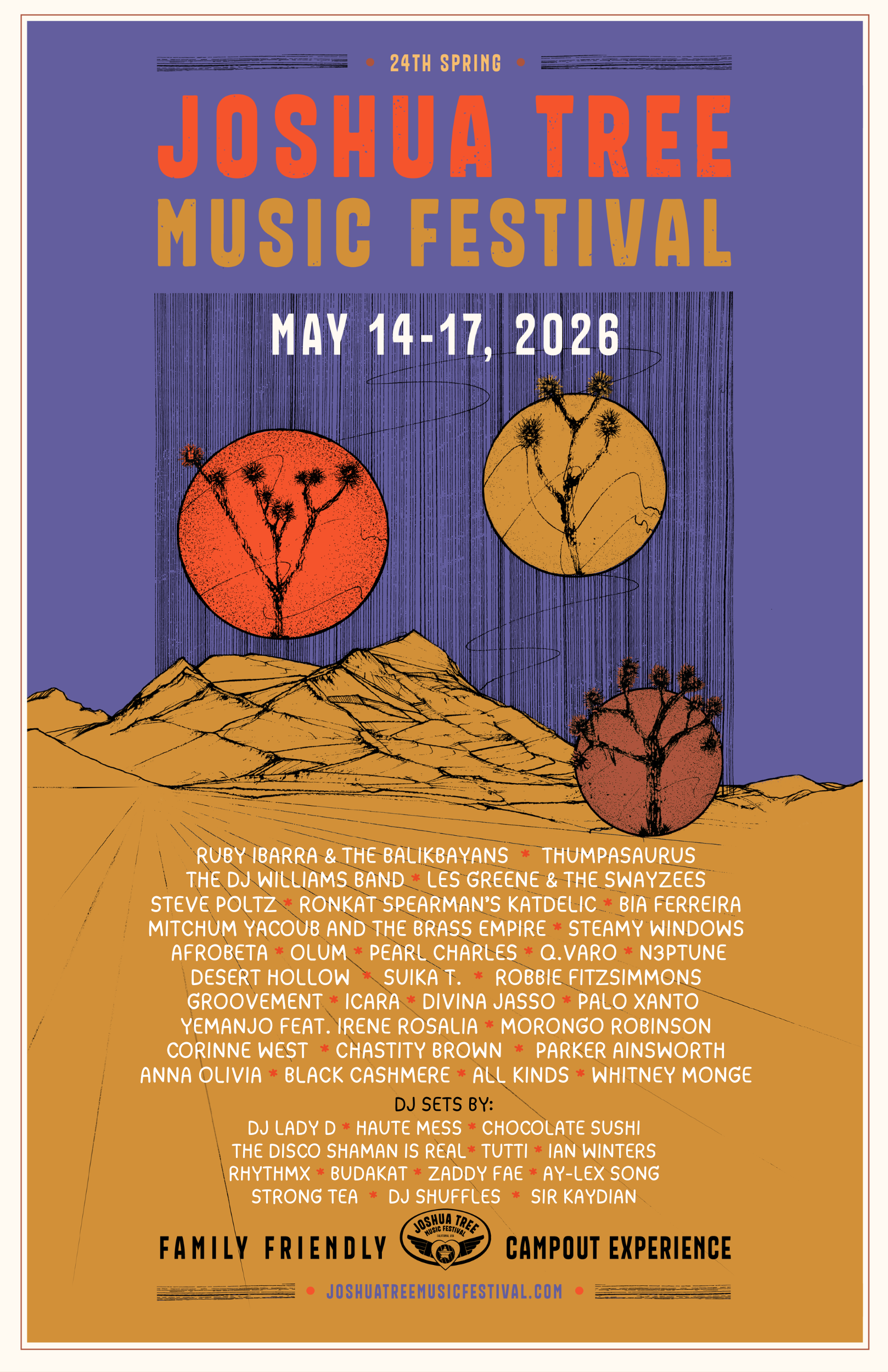
Read the lineup by feel
The Joshua Tree sound is not a headliner arms race. It is a trust exercise. You go because the festival has taste, and because the intimate setting lets artists land without needing arena-sized names around them.
| If you want… | Start listening for… | Possible 2026 entry points |
|---|---|---|
| Funk and joyful weirdness | Punk-funk, theatrical grooves, elastic live-band mischief | Thumpasaurus |
| Desert dance release | DJ sets with ritual, rhythm, sweat, and looseness | Ian Winters, The Disco Shaman, Boogaloo Stage lanes |
| Voice and story | Rap, spoken word, identity, literary force, direct audience connection | Ruby Ibarra |
| Rock and soul lift | Power vocals, R&B edge, live-band punch, big emotional choruses | Les Greene & The Swayzees |
| Festival-family songwriting | Humor, human warmth, singalong, offbeat stage charm | Steve Poltz |
The clearest highlight is Thumpasaurus. Punk-funk in the desert brings the high-energy strangeness that makes a small festival feel hand-built. It is dance music without behaving like club music, weird enough to wake people up, and physical enough to make the body understand before the brain catches up.
JTMF’s stronger move is how the live and DJ lanes sit beside each other. Ian Winters brings a dancefloor-as-release lens, while The Disco Shaman reads like pure Joshua Tree: desert mystic, rhythm guide, movement instigator. That mix is the festival’s personality. It wants you dancing, but it also wants you to notice what the dancing is doing to you.


If you are new to this festival, do not over-plan the poster. Pick two anchors, then wander. Joshua Tree rewards the person who lets the smaller-font names become the point.
Follow the official Spring 2026 music page for the lineup and schedule archive, and watch the festival site for future tickets and lineup updates.
Build a listening route
Joshua Tree is a discovery festival, so the lineup can not feel like a headliner scoreboard. The right question is what kind of desert weekend the reader wants: global rhythm, funk, brass, psych, folk softness, family-hour joy, late-night dance, or the kind of regional find that turns into a personal favourite.
Start with Thumpasaurus if you want the funk-forward lane: playful, funky, physical, weird enough to feel alive, and built for people who like their dance music with a grin rather than a dead-serious pose. That kind of set fits the magazine because it connects movement, humor, style, and real musicianship.
The broader route leaves room for global and roots programming. Joshua Tree has long had a taste for music that travels through rhythm rather than chart logic: Afrobeat, cumbia, brass, reggae, desert psych, folk, soul, and hybrid live-band energy. A good guide helps readers follow the body first: hips, feet, breath, shade, dust, then nighttime release.
Unlike Coachella, the smaller scale makes experimentation easier. If a set does not land, the next discovery is not a pilgrimage away. That closeness is part of the sound. It lets people take chances on unfamiliar names, follow a groove from camp into the bowl, or let a daytime set become the memory they did not expect.
Visual presence matters too. At a smaller festival, a performer’s styling, stage movement, handmade details, or community energy can read more clearly than it would on a giant screen. Music coverage crosses into festival fashion there without forcing the connection.
A practical listening plan might start with one joyful funk set, one global-rhythm discovery, one softer daytime performance, one late-night dance route, and one artist you choose only because the description sounds alive. That is enough structure to prevent drift without turning a small festival into homework.
Let the setting change the plan
The sound also connects directly to place. Desert air can warm acoustic instruments, sharpen percussion and give slower songs more weight. The open air changes how a set lands. A good listening path leaves space for that instead of forcing every artist into a narrow genre box.
The official Spring 2026 music page gives the factual lineup base, but the real value is how the names sit together: live-band joy, desert looseness, families on site, workshops nearby, and a crowd that can give unfamiliar artists a fair chance.
Joshua Tree can feel richer than its scale suggests. A smaller poster can hold more life when the site lets people actually hear, move, wander, and return to the same faces across the weekend.
The listening path is strongest when it stays generous. Follow the groove, take the unfamiliar name seriously and let slower or stranger sets shape the weekend instead of treating them as filler.
For readers who usually chase top lines, Joshua Tree is a welcome reset. It rewards people who listen for warmth, musicianship, oddity, humor, rhythm, and the moment when a small crowd decides to become one room.
That room can be quiet, funky, dusty, strange, or sweet, and the poster works best when readers leave space for all of it.
The desert rewards patience.
Continue Exploring
 Wicked Woods ’26 Survival Guide
Plan Wicked Woods 2026 around vehicle passes, gate hours, uneven terrain, weather, offline maps, care routes, water, sleep and a festival-specific checklist.
Wicked Woods ’26 Survival Guide
Plan Wicked Woods 2026 around vehicle passes, gate hours, uneven terrain, weather, offline maps, care routes, water, sleep and a festival-specific checklist. Wicked Woods ’26 Sound Guide
A listener-first route through the Wicked Woods 2026 lineup, from house and funk to deep 140, jungle, drum and bass, global bass and regional discoveries.
Wicked Woods ’26 Sound Guide
A listener-first route through the Wicked Woods 2026 lineup, from house and funk to deep 140, jungle, drum and bass, global bass and regional discoveries. Canada
Sonic Springs Survival Guide
Prepare for forest camping, cool damp nights, weak signal, river rules, limited showers and the offline planning that makes Sonic Springs easier.
Canada
Sonic Springs Survival Guide
Prepare for forest camping, cool damp nights, weak signal, river rules, limited showers and the offline planning that makes Sonic Springs easier.