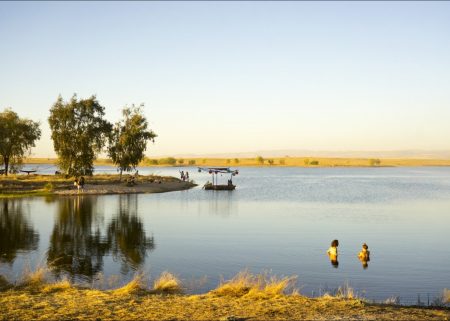


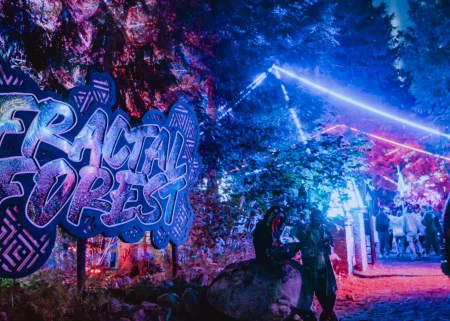
Joshua Tree Music Festival's 24th Spring edition is scheduled for May 14-17, 2026 at Joshua Tree Lake Campground. The festival happens in the Mojave desert, with live music, camping, workshops, movement, Kidsville, visual art, vendors, healing spaces, and the kind of friendly scale that makes wandering part of the plan.
JTMF is not trying to win through size. Its appeal is closeness: the stage is close, the campground is close, the lake area and music bowl are close, and the programming is built so a person can dance, stretch, learn, eat, rest, and bump into the same new friend again later.
The Spring 2026 edition leans into that identity. The music program promises discovery rather than a pure headliner race. Positive Vibration Station gives the body-and-soul lane real space, with yoga, breath, movement, meditation, sound healing, ecstatic dance, and workshops that make the festival feel less like a concert series and more like a desert practice weekend with a dancefloor attached.


This lane matters because it proves a festival does not have to be huge to be culturally alive. A smaller festival can often teach the lesson more clearly: bring your body, bring your curiosity, bring enough shade, and let the weekend introduce you to music you did not already know you needed.
The Deep Research packet adds a useful 2026 layer: Joshua Tree is not only protecting a twice-a-year weekend. Its Forever Home direction points toward a more permanent desert culture base, with room for residencies, smaller gatherings, kids' arts and ecology programming, wellness weekends, and the kind of continuity independent festivals usually struggle to hold.
That makes the scale feel intentional rather than merely small. The art gallery, live painting, Kidsville, healing spaces, workshop culture, and handmade fashion lane all support the same idea: JTMF is strongest when it behaves like a social village instead of a queue machine.
If JTMF sounds like your desert lane, follow Joshua Tree Music Festival's official updates for future tickets, lineups, campground details, and October/May editions.
Subscribe to Sparked Magazine for Sound Guides, Survival Guides, Features, and more coverage of small festivals with real culture.
Joshua Tree Music Festival is a smaller world on purpose. That gives Joshua Tree its shape: less spectacle, more intimacy; less conquest, more arrival. This is not a massive machine. It is a compact desert gathering that can feel more emotionally generous than something ten times its size.
The Spring 2026 edition makes sense as a Sparked backfill because it has the pieces this magazine cares about: music discovery, desert style, movement, family-friendly culture, a campground that shapes the whole weekend, and enough artful looseness to make people feel like they are joining a community instead of consuming an itinerary.
The setting is not a generic desert backdrop. Joshua Tree Lake Campground gives the festival a close, dusty, human-scale environment where camp life, stage life, and accidental conversation are hard to separate. That intimacy changes the fashion too. The strongest looks are not only costumes; they are desert-functional layers, hats, boots, breathable fabrics, jewelry, color, and sun protection that still looks intentional.
The broader programming matters too. Positive Vibration Station, yoga, movement, family areas, vendors, food, healing arts, and workshops all help the weekend feel less like a show and more like a small seasonal return. For readers used to mega-festivals, that may be the selling point.
Use the official music, campground, ticket, and programming pages before planning the weekend. Sparked's Joshua Tree package helps readers decide whether they want the desert in a quieter, more community-shaped form.
Tickets and camping belong in the first read because Joshua Tree's scale changes the buying decision. A smaller festival can sell out key options quietly, and the best experience often depends on understanding campground rules, arrival timing, and whether the weekend is built for family, friends, solo discovery, or a softer desert reset.
For Sparked, the best reason to cover it is contrast. After Coachella's global glare and LIB's temporary-city sprawl, Joshua Tree shows what happens when the festival value is closeness. You can notice the vendor. You can remember the artist's face. You can leave a workshop and still find the same person dancing later. That intimacy is not a lesser version of festival culture; it is one of its strongest forms.
That closeness also changes preparation. The reader is not trying to master a massive machine; the reader is trying to arrive gently enough to join a small desert world without rushing past what makes it special.
Get the next Sparked festival guide
Get festival guides, lineup notes, travel context, and post-festival coverage in your inbox.