



Read the lineup by feel
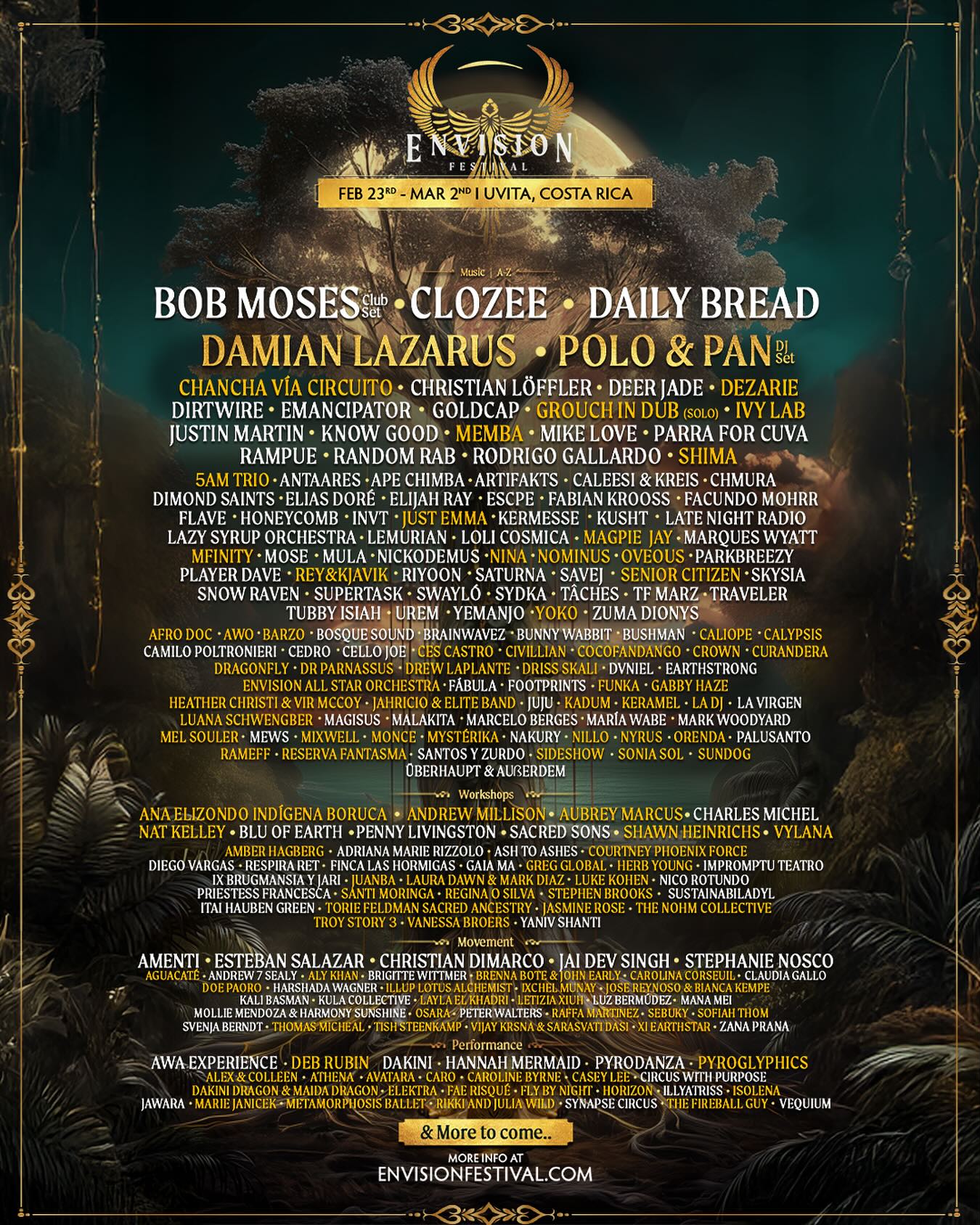
Envision’s 2026 lineup is best read as a climate map. The festival asks what kind of body-state you want to inhabit: beach softness, jungle bass, late-night ritual, live-band warmth, Latin-rooted rhythm, or sunrise recovery. The poster carried prestige electronic names such as Polo & Pan, Damian Lazarus, CloZee, Bob Moses, Daily Bread, Christian Loffler, Emancipator, Justin Martin, Ivy Lab, Parra for Cuva, and Rodrigo Gallardo, with regional and culturally rooted names giving the lineup more place-specific texture. That is the right kind of spread for Envision because the site would make a single-sound lineup feel thin. For dreamy beach glamour, start with Polo & Pan, Parra for Cuva, Christian Loffler, and Bob Moses.
This is the melodic, elegant, slightly sun-kissed route: music that can hold romance, sunset, and the feeling of being somewhere expensive and strange without becoming too soft to dance to. For ritual-leaning late-night movement, Damian Lazarus is the obvious anchor. His work makes sense at Envision because it already carries a reputation for event design, desert mysticism, and long-form dancefloor storytelling. Pair that with Rodriguez Jr., Rampue, and Justin Martin when you want a route that can move from polished house into something deeper and more humid. For colourful bass with shape rather than blunt force, CloZee, Daily Bread, Artifakts, Chmura, and Ivy Lab give the low-end side a more sculpted shape. The stronger bass route has groove, colour, play, or emotional architecture rather than only impact.
This lane gives readers a way into Envision’s heavier side without making the whole weekend feel like a test of endurance. For music that speaks to place rather than passport aesthetics, Rodrigo Gallardo, Chancha Via Circuito, INVT, Nakury, and the Latin-rooted or politically textured acts deserve more attention than they often get in quick lineup posts. Envision’s regional dialogue, however imperfect, separates it from an imported electronic resort. For organic softness and sunrise decompression, Emancipator, Mose, Random Rab, Honeycomb, and similar routes are the easier doors. This is not the lane for proving anything. This lane slows the pace, gives the nervous system room and breaks the week’s marathon rhythm.


Build a listening route
For readers who do not know where to begin, A practical listening path is simple: start with one melodic set, one jungle-bass set, one Latin-rooted or regional discovery, one live or cross-cultural live performance, and one sunrise or decompression lane. Envision is too long and too physically demanding to chase only headliners. A stronger weekend is built in arcs. Envision’s contradiction is part of the listening path. Envision loves the language of ceremony, but it also books serious club and bass music. That mix can be awkward in the wrong hands and powerful in the right ones. The best sets respond to the site without treating it as decoration. Envision’s best listening path avoids genre-taxonomy overload.
It gives the listener a clear sequence: beauty here, bass there, something rooted before sunset, something strange after midnight and something gentle once the jungle has taken its toll. Check the official Envision lineup and schedule before building a personal route, because set times and archived details can change.
The strongest music angle is how the lineup divides the day. Envision is one of those festivals where a noon movement class, a sunset live set, a midnight electronic slot, and a sunrise decompression set can all feel like part of the same sentence. Pacing matters as much as taste.
A reader who likes funk and groove can still find a route here, but it is not always the obvious one. Look for artists who bring swing, warmth, samples, Latin rhythm, live instrumentation, or a human pulse inside electronic architecture. Envision can drift into too much soft-focus spirituality if the music route is not grounded in the body.
Let the setting change the plan
The cultural texture needs care. When a lineup borrows from Latin, Indigenous, cross-cultural fusion, reggae, and global-bass aesthetics, rooted sounds are not exotic seasoning. Listen for what the artist is doing, where the rhythm comes from and whether the set connects to place or merely decorates it.
The route can feel inviting, not superior. Envision attracts people who may know yoga teachers better than DJs and people who may know bass music better than ceremony. Both groups deserve a way in without either feeling behind.
The music also benefits from pacing by environment. A beach-adjacent afternoon, a jungle night, a live-band sunset, and a sunrise decompression route are not interchangeable moods. Readers can use the official music program and stage schedules to turn the poster into a body plan rather than a trophy list.
The best route leaves room for surprise without losing the thread: one melodic anchor, one bass route, one Latin-rooted or regional discovery, one live or cross-cultural live performance, and one gentle reset. That mix respects Envision’s biggest promise: state change through sound, setting and pacing.
Continue Exploring
 Wicked Woods ’26 Survival Guide
Plan Wicked Woods 2026 around vehicle passes, gate hours, uneven terrain, weather, offline maps, care routes, water, sleep and a festival-specific checklist.
Wicked Woods ’26 Survival Guide
Plan Wicked Woods 2026 around vehicle passes, gate hours, uneven terrain, weather, offline maps, care routes, water, sleep and a festival-specific checklist. Wicked Woods ’26 Sound Guide
A listener-first route through the Wicked Woods 2026 lineup, from house and funk to deep 140, jungle, drum and bass, global bass and regional discoveries.
Wicked Woods ’26 Sound Guide
A listener-first route through the Wicked Woods 2026 lineup, from house and funk to deep 140, jungle, drum and bass, global bass and regional discoveries. Canada
Sonic Springs Survival Guide
Prepare for forest camping, cool damp nights, weak signal, river rules, limited showers and the offline planning that makes Sonic Springs easier.
Canada
Sonic Springs Survival Guide
Prepare for forest camping, cool damp nights, weak signal, river rules, limited showers and the offline planning that makes Sonic Springs easier.